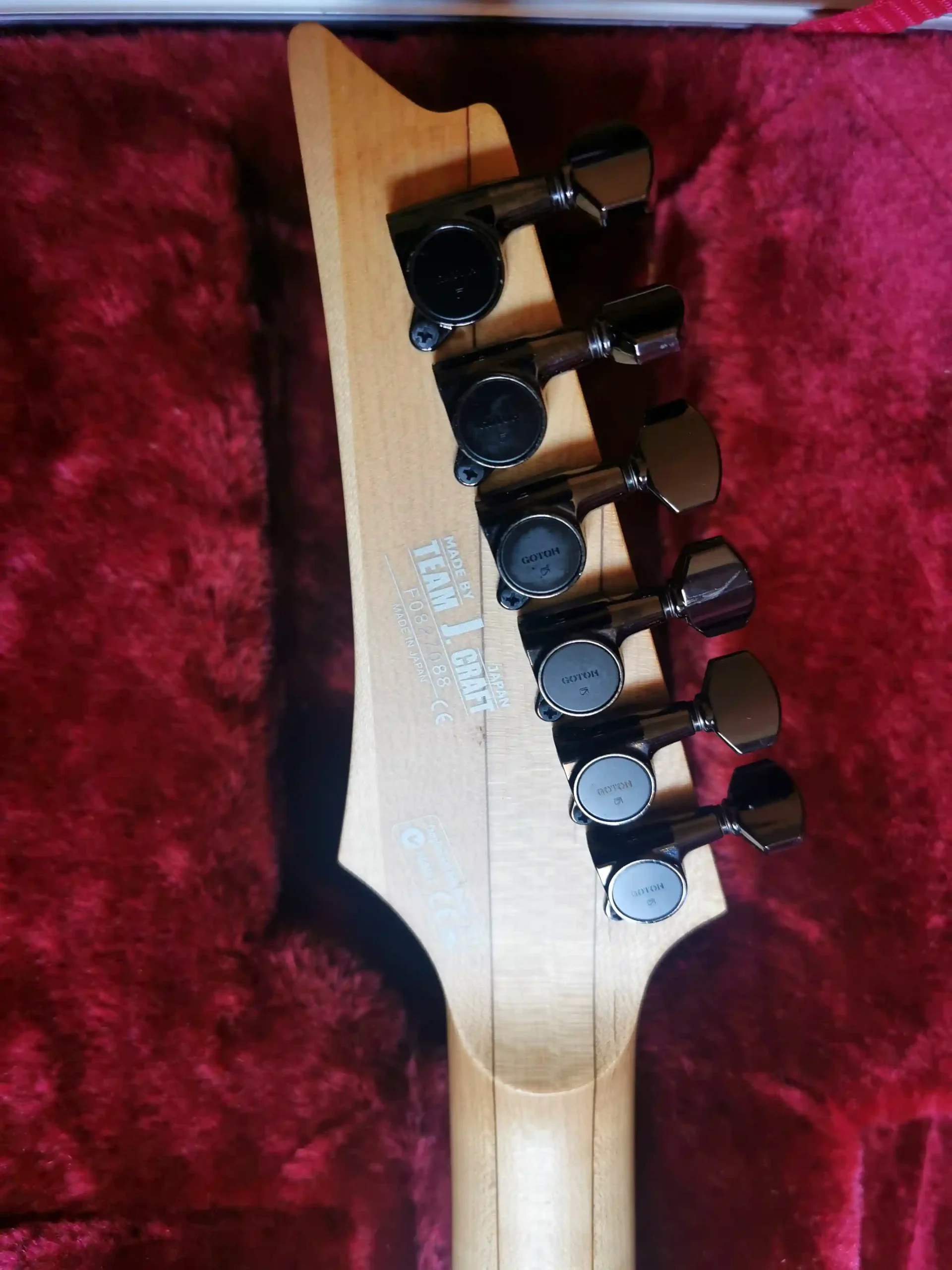
If you want to know how old your Ibanez is or where it was made, start with the serial number. First, you need to understand what a serial number looks like and where it’s located. Then check it with a serial number decoder.
Quick Navigation
What Does an Ibanez Serial Number Look Like?
Ibanez uses a variety of serial number formats throughout its history. Guitars were produced by many companies in different countries (Japan, Korea, Indonesia, China), with different numbering schemes at each factory.
Typically, an Ibanez guitar’s serial number is a combination of letters and numbers.
For example: F0414210
But in some cases, the serial number may consist solely of numbers.
For example: 8071234
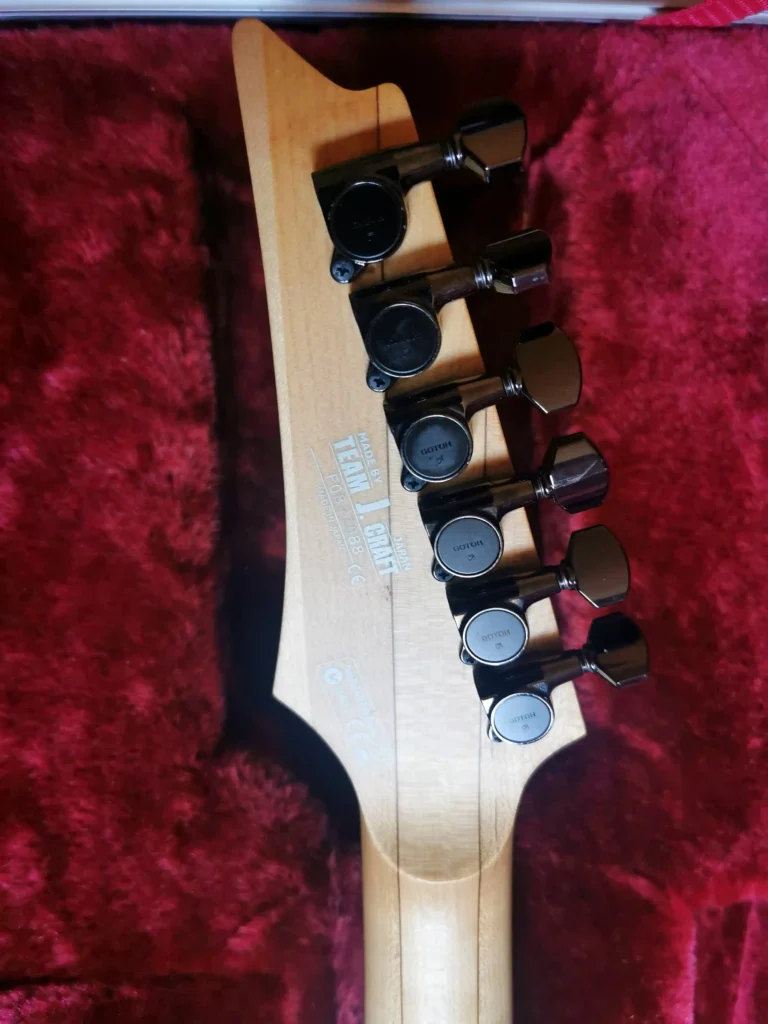
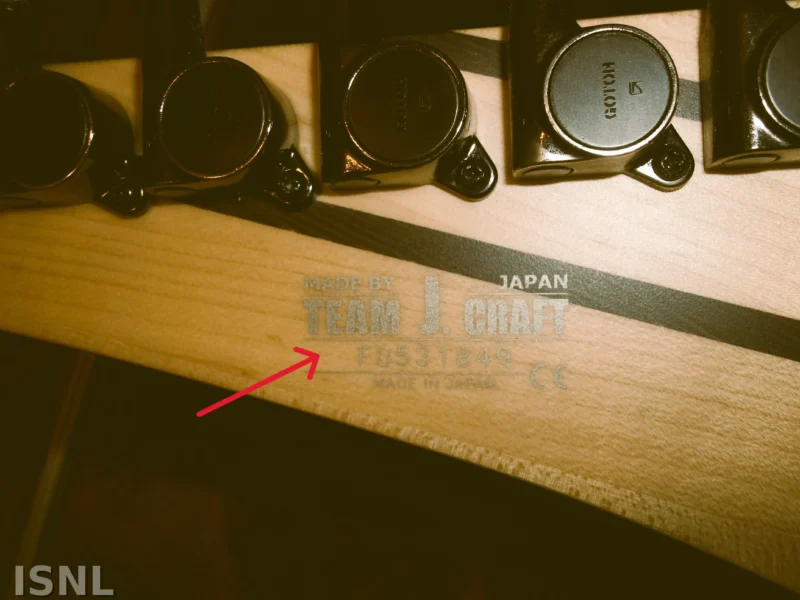
Where To Find Your Ibanez Serial Number?
If you’re looking for the serial number on an electric guitar, here are a few places it might be found:
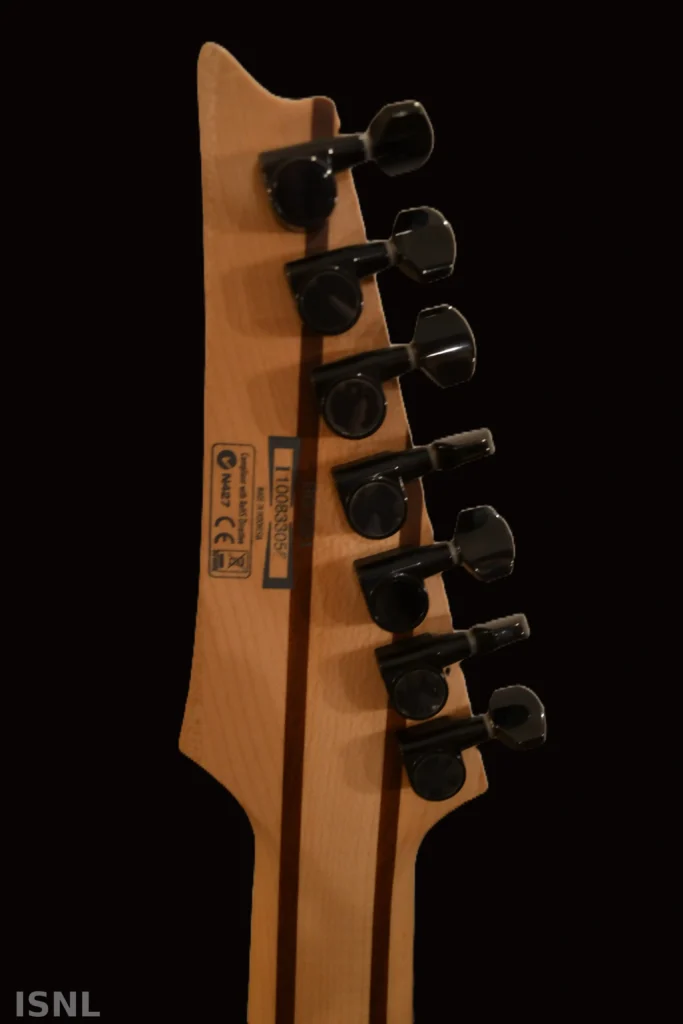
- Printed on a sticker on the back of the headstock;
- Stamped on the headstock itself;
- Stamped on the metal cover plate between the neck and the body.
If you need the serial number on an acoustic guitar, look in the following places:
- Stamped or written on a label inside the hollow body;
- Stamped on the neck block inside the guitar.
Ibanez Serial Number Decoder
Enter your Ibanez serial number and instantly find out the production year of your guitar. This tool is absolutely free and unlimited. The first decoder covers Japanese serial numbers. The second covers Korean, Indonesian, and Chinese Ibanez serial numbers.
Ibanez Japan Serial Number Decoder
(Works for guitars made in Japan)
Ibanez Korea, Indonesia, China Decoder
(Works for guitars made in Korea, Indonesia and China)
If you can’t find the information you need through the decoder or have any doubts, try searching manually, using the guide, charts or Ibanez guitar catalogs.
How To Identify The Year And Country By Ibanez Serial Number?
Ibanez began using serial numbers on its guitars in September 1975.
As mentioned above, Ibanez doesn’t have a single serial number format. Ibanez instruments were manufactured in various countries, including Japan, Korea, Indonesia, and China. Each factory in each of these countries used different numbering schemes.
There are several commonly used serial number formats. We’ll cover these first. Then we’ll look at the rarer and more special schemes.
1 Letter + 6 Digits Serial Number Format
This format was widely used in Japan and Korea. Depending on the period, the letter may indicate either the production month or the factory.
| First Letter | What the Letter Means | Country | Year Identification | Year range |
|---|---|---|---|---|
| A-L | Month code (A=Jan … L=Dec) | Japan* | Digits 1-2 = year | 1975-1986 |
| F, I, H, T | Factory code | Japan | Digit 1 = last digit of year | 1987-1996 |
| A, C, P, Y | Factory code | Korea | Digit 1 = last digit of year | 1987-1995 |
| T only | Terada factory | Japan | Digits 1-2 = year | 1998-2022 |
*Basically, Ibanez guitars with these serial numbers were produced by FujiGen Gakki and Terada. However, the Blazer model was produced by Dyna Gakki, and some Axstar series guitars were produced by Chushin Gakki.
Factory Code (Japan):
- F = FujiGen Gakki in Nagano (1987-1996).
- Y = Iida Gakki in Nagoya (1988-1992).
- H = Terada in Nagoya (1988-1996).
- T = Terada in Nagoya (1988-1996).
Factory Code (Korea):
- A = Saein Musical Instrument in Incheon.
- Y = Yoojin Industrial in Yangju for acoustic, in Guangju for electric.
- C = Cort Guitars in Incheon (1987-2007) or Daejeon (1991-2007).
- P = Peerless Korea in Pusan (1987-1988).
How To Use The Chart?
Example 1
Serial: G770544
- First letter = G
- G is between A-L
- Letter = month code
- Digits 77 = 1977
Country: Japan
Year: 1977
Example 2
Serial: F529157
- First letter = F
- F = Japanese factory code
- First digit = 5
Country: Japan
Year: 1995 (because this system was used only 1987-1996)
Example 3
Serial: P315821
- First letter = P
- P = Korean factory
- First digit = 3
Country: Korea
Year: 1993
Example 4
Serial: T990544
- First letter = T
- Two digits 99 clearly indicate the year
Country: Japan
Year: 1999
Month Identification (Japan 1975-1986)
Early Japanese Ibanez serials encoded the month directly in the letter, making them among the easiest to date accurately.
| Letter | Month |
|---|---|
| A | January |
| B | February |
| C | March |
| D | April |
| E | May |
| F | June |
| G | July |
| H | August |
| I | September |
| J | October |
| K | November |
| L | December |
Important Notes:
- If the letter is A-L – this is ALWAYS Japan (1975-1986)
- If the letter identifies a factory, the year digit is interpreted only within the known production range
Japanese Production Month Chart (1987-2004)
Used mainly for FujiGen-made guitars to determine the manufacturing month from the production number.
| Production Number Range | Month |
|---|---|
| 00001-05000 | January |
| 05001-10000 | February |
| 10001-15000 | March |
| 15001-20000 | April |
| 20001-25000 | May |
| 25001-30000 | June |
| 30001-35000 | July |
| 35001-40000 | August |
| 40001-45000 | September |
| 45001-50000 | October |
| 50001-55000 | November |
| 55001-60000 | December |
Important note:
This system was used mainly for warranty tracking. In practice, it may not have been applied consistently.
1 Letter + 7 Digits Serial Number
(Japan, Korea, Indonesia late 1980s-2000s)
In this format, the letter usually identifies the factory, while the digits encode year and production sequence.
| First Letter | Country | Factory | Year Logic | Year Range |
|---|---|---|---|---|
| F | Japan | FujiGen (Nagano) | First 2 digits = year | 1997-2025 |
| E | Korea | Sung-Eum | First digit = year, next two = month | 1987-1995 |
| S | Korea | Samick | First digit = year, next two = month | 1990-1995 |
| I | Indonesia | Cor-Tek factory | First digit = year, next two = month | 2007-2009 |
How To Read The Year?
Japan (F + 7 digits)
Digits 1-2 = production year
Example:
Serial: F0414210
- F = FujiGen (Japan)
- 04 = 2004
Country: Japan
Year: 2004
Korea (E/S + 7 digits)
Digit 1 = last digit of the year
Digits 2-3 = month
The decade is defined by the known production period.
Example:
Serial: E1020456
- E = Sung-Eum (Korea)
- 1 = 1991
- 02 = February
Country: Korea
Year: 1991
Indonesia (I + 7 digits)
Digit 1 = last digit of the year
Digits 2-3 = month
The decade is defined by the known production period.
Example:
Serial: I8110459
- I = Cor-Tek Indonesia
- 8 = 2008
- 11 = November
- 0459 = 459th instrument that month
Country: Indonesia
Year: 2008
Important Notes
- Japanese serials after November 2004 use the model year, not necessarily the exact build year.
- Korean serials in this format are generally very reliable for exact dating.
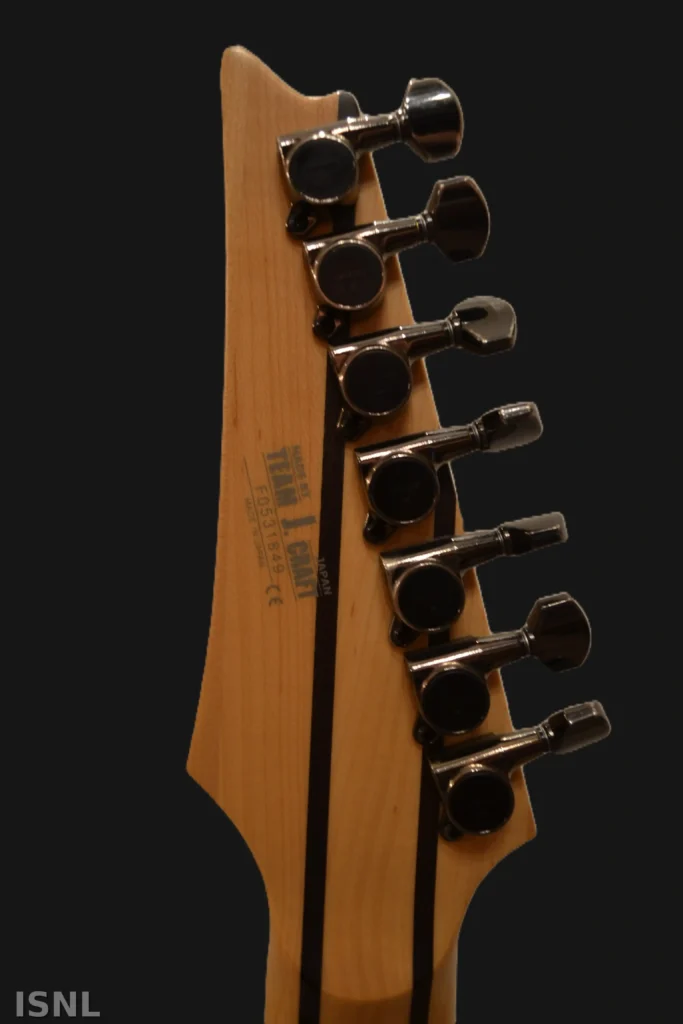
Ibanez production month 2004-2025.
Approximate month of production, taking into account that about 3000 guitars were produced per month. Applies only to guitars made in Japan.
| Serial Number | Production Month |
|---|---|
| 00001-02999 | November |
| 03000-05999 | December |
| 06000-08999 | January |
| 09000-11999 | February |
| 09000-11999 | March |
| 15000-17999 | April |
| 18000-20999 | May |
| 21000-23999 | June |
| 24000-26999 | July |
| 27000-29999 | August |
| 30000-32999 | September |
| 33000-35999 | October |
1 Letter + 8-9 Digits Serial Number
(China and Indonesia)
These serials usually encode year, month, and production sequence very clearly.
| Serial Format | Example | Country | Year Range | How to Read the Year |
|---|---|---|---|---|
| Letter + 9 digits | K160600221 | Indonesia | 2001-2022 | First two digits = year |
| Letter + Letter + 9 digits | PR051112345 | Indonesia | 2004-2007 | First two digits = year |
| S + 8 digits | S05030941 | China | 2002-2022 | First two digits = year |
| A + 8 digits | A15060177 | China | 2005-2022 | First two digits = year |
| J + 9 digits | J111214321 | China | 2004-2012 | First two digits = year |
| GS + 9 digits | GS090301145 | China | 2007-2022 |
How To Read?
- Prefix = Factory
- First two digits = year
- Digits 3-4 = month
This logic applies consistently across Chinese and Indonesian serials.
Factory Chart.
| Prefix | Country | Factory |
|---|---|---|
| I, K, J | Indonesia | Cor-Tek/Kwo Hsiao/Sejung |
| S, A, J | China | Sejung (mostly) |
| GS, SS | China | Unknown (often GIO) |
Example 1
Serial: K160600221
- K = Indonesia (Kwo Hsiao)
- 16 = 2016
- 06 = June
Country: Indonesia
Year: 2016
Example 2
Serial: GS090301145
- GS = China
- 09 = 2009
- 03 = March
Country: China
Year: 2009
Important Notes
- Factory codes are not always documented
- Dating accuracy is generally high
Digits Only Serial Number (7-10 Digits)
(Korea, late 1990s-2000s)
These serial numbers do not include factory letters, so dating relies entirely on numeric patterns. These serials were used almost exclusively in Korea, mainly by Cort.
| Digits | Example | Country | Year Range | How To Read The Year |
|---|---|---|---|---|
| 7 digits | 8071234 | Korea | 1997-2008 | First digit = year |
| 8 digits | 99004321 | Korea | 1997-2008 | First two digits = year |
| 10 digits | 0112004524 | Korea | 1997-2008 | First two digits = year |
Example 1:
Serial: 8071234
- 8 = 1998 or 2008
Country: Korea
Year: 1998 or 2008
Example 2
Serial: 0112004524
- 01 = 2001
- 12 = December
Country: Korea
Year: 2001
Important Notes
- These serials never indicate Japan
- It is important that if the serial number consists of 7 digits, the guitar could be from the 90s or the 2000s.
Serial Number with Letter in the Middle or at the End
Used primarily for Indonesian Premium models.
| Serial Format | Example | Country | Year Range | How to Read the Year |
|---|---|---|---|---|
| 5 digits + Letter | 10701B | Indonesia | 2010-2011 | Last letter = year |
| Letter + 4 digits + Letter | J0321D | Indonesia | 2011-2015 | Last letter = year |
How To Read The Year?
- A = 2010
- B = 2011
- C = 2012
- D = 2013
- E = 2014
- F = 2015
Example 1
Serial: 10701B
- B = 2011
Country: Indonesia
Year: 2011
Example 2
Serial: J0321D
- D = 2013
Country: Indonesia
Year: 2013
Note:
These serials do not encode the factory and are mostly linked to Ibanez Premium models.
Rare & Unclear Serial Numbers
1 Letter + 5 Digits Serial Number
(Japan, 2005-2022)
This is a rare Japanese Ibanez serial format. The first letter indicates the month of production (A = January through L = December). The next two digits show the year. The following digit is a model code, and the last two digits are the production sequence for that month.
Example:
Serial: H18327
- H = August
- 18 = 2018
- 3 = model code
- 27 = 27th instrument in that run
Country: Japan
Year: 2018
This format is generally associated with Sugi Musical Instruments.
Prefix IG + 6 Digits Serial Number
(Japan, 2016-2022)
This Japanese format is used on some guitars linked to the Ibanez Guitar Development Center. The prefix IG points to that facility. The next two digits indicate the year, the following two indicate the month, and the final two digits are the production sequence.
These serial numbers are usually handwritten on the back of the headstock, which makes them stand out from most standard printed Ibanez serials.
Example:
Serial: IG220408
- IG = Ibanez Guitar Development Center
- 22 = 2022
- 04 = April
- 08 = 8th instrument
Country: Japan
Year: 2022
1 or 2 Letters + 7 Digits Serial Number
(Korea,1995-1999)
This Korean Ibanez serial format uses a single factory letter followed by eight digits. The opening letter (s) identifies the factory, the next digit gives the last digit of the year, the following two digits indicate the month, and the final four digits are the production sequence for that month.
Known factory codes in this format include:
- A = Saein
- C = Cort
- S = Samick
- Y = Yoojin
- SQ = Saehan Guitar Technology
Example:
Serial: C8071543
- C = Cort
- 8 = 1998
- 07 = July
- 1543 = 1543rd instrument that month
Country: Korea
Year: 1998
1 or 2 Letters + 8 Digits Serial Number
(Korea, 2000-2008)
In the 2000s, the format stayed largely the same, but the first two digits after the factory letter indicate the year instead. The following two digits indicate the month, and the final four digits are again the production sequence for that month.
Example:
Serial: A07062318
- A = Saein
- 07 = 2007
- 06 = June
- 2318 = 2318th instrument that month
Country: Korea
Year: 2007
4L + 9 Digits Serial Number
A small number of Chinese Ibanez guitars use the 4L prefix. While the prefix itself remains unexplained, the next two digits indicate the year, the following two indicate the month, and the final five digits appear to be the production sequence. What remains unclear is whether those last five digits reset every month or continue through the year.
Example:
Serial: 4L091100731
- 09 = 2009
- 11 = November
- 00731 = production sequence
Country: China
Year: 2009
KR + 9 Digits Serial Number
(Korea, 1999-2008)
This is a rare Korean Ibanez serial format. The KR prefix is still unexplained, but the number itself indicates the date of manufacture. The first two digits indicate the year, the next two indicate the month, and the last five digits appear to be the production sequence.
Example:
Serial: KR030701284
- 03 = 2003
- 07 = July
- 01284 = production sequence
Country: Korea
Year: 2003
Prefix W + 6 Characters
(Korea, 1999-2008)
This Korean serial format is associated with World Musical Instrument Co. The second digit or letter works as the month code: 1-9 for January to September, X for October, Y for November, and Z for December. The third character gives the last digit of the year, and the final four digits are the production sequence for that month.
Example:
Serial: WY41258
- Y = November
- 4 = 2004
- 1258 = 1258th instrument that month
Country: Korea
Year: 2004
Prefix Z + 6 Characters
(China, 1999-2006)
This Chinese Ibanez serial format is associated with Yeou Chern Enterprises Instrument Co. Ltd. in Guangdong. The prefix Z identifies the factory. The second character indicates the month of production using a mixed code: 1-9 = January to September, X = October, Y = November, and Z = December. The third character gives the last digit of the year, and the final four digits are the production sequence for that month.
Example:
Serial: ZY41286
- Z = Yeou Chern Enterprises Instrument Co. Ltd.
- Y = November
- 4 = 2004
- 1286 = 1286th instrument that month
Country: China
Year: 2004
Ibanez Artist Serial Number
The Artist line began in 1973. Early guitars used 26xx model numbers. Later guitars used AR model names. These two naming periods belong to the same Artist family.
Some early Artist guitars from the mid-1970s have no serial number. Ibanez began adding serial numbers to solid-body guitars around August 1975. The system reached set-neck guitars later, in 1976. This is why some early Artist models exist without a serial.
The Artist family included solid-body, semi-hollow, and hollow-body models. The name Artstar first appeared in 1988. Before that, many hollow and semi-hollow models were still part of the Artist line. This creates overlap between older Artist and later Artstar guitars.
Most classic Artist guitars from the late 1970s and 1980s were made in Japan. The main serial format for these guitars is 1 letter + 6 digits. The letter indicates the month. The next two digits indicate the year. The last four digits are the production number. This is the most common format for the main FujiGen era of the series.
Later Japanese Artist guitars can use F + 6 digits or F + 7 digits. The F + 6 digits format belongs to the later 1980s and 1990s. In that format, F stands for FujiGen. The next digit indicates the last digit of the year. The remaining digits are the production number.
The F + 7 digits format appears on later Japanese production and reissues. In that format, the first two digits indicate the year. Late-1980s Japanese Artist guitars can show the FujiGen F7 overlap. Some guitars made in 1988 still carry a serial number that starts with F7. In that period, an F7 serial does not always mean 1987.
Japanese Artist production was not limited to FujiGen. Some later AR300 versions were made by Iida Gakki in 1989-1992 and by Terada in 1996-1998. These guitars use the normal Japanese Ibanez serial systems of those factories.
A Korean AR300 appeared in 1997, and more Korean AR300 versions followed in 2004-2007. These guitars use regular Korean Ibanez serial formats, usually based on the factory prefix and a dated numeric code.
Chinese production appears on later standard Artist models. For example, the AR320 was made in China in 2012-2014, and the AR325 was also made in China from 2012 onward.
Ibanez RG Serial Number
The RG series appeared in 1987. Early Ibanez RG guitars were made mainly in Japan. These guitars usually use the classic FujiGen serial number formats. From 1987 to 1996, the usual format is F + 6 digits. In this format, F stands for FujiGen, and the first digit after F indicates the last digit of the year. From 1997 onward, Japanese RG guitars usually use F + 7 digits. In that format, the first two digits indicate the year.
Later RG production expanded beyond Japan. Many standard models were made in Korea in the 1990s and 2000s. These guitars use regular Korean Ibanez serial systems. Common Korean prefixes include C, S, and W. Depending on the period, the year is written either as one digit or two digits after the factory prefix. The month usually follows after that.
A large part of the later standard RG line was produced in Indonesia. Common Indonesian prefixes include I, K, and J. These serials usually begin with the factory letter, followed by two digits for the year and two digits for the month. This pattern is common on many modern Indonesian RG guitars.
The RG370DX moved from Korea to Indonesia in 2005. Early versions of the RG7321 were manufactured in Korea, while later versions – in Indonesia. So, Korea is more typical for earlier non-Japanese RG models, and Indonesia – for later ones.
Modern high-end RG Prestige guitars belong mainly to Japan. The Prestige line began in 1996. Since 2009, all Prestige models have again been produced in Japan by FujiGen.
Ibanez GIO Serial Number
The GIO line began in 1998. GIO model names use a leading G: GRG, GRX, GAX, GSA, and GSR. It marks the instrument as part of the GIO line.
Some GIO families sit directly inside older Ibanez series:
- GRG belongs to the RG family.
- GSA belongs to SA.
- GRX belongs to RX.
- GAX belongs to AX.
In some cases, whole lower-end branches were carried under the GIO label, including RX as GRX and AX as GAX.
Some early GIO guitars were made in South Korea. By 2009, Ibanez no longer listed Korean guitar production in the lineup. From that point, lower-end production was centered mainly in China and Indonesia. Some models were made in both countries during the same period. Because of that, GIO guitars can appear with different country-based serial formats depending on the exact year and version.
On many GIO guitars, the serial number was placed on a sticker on the back of the headstock. These stickers can wear off or disappear over time, so a missing serial number on a GIO does not automatically mean the guitar is fake.
GIO models use the regular Chinese and Indonesian Ibanez serial systems of their period. Common Indonesian prefixes include I, K, and J, followed by year, month, and a production number.
Chinese GIO guitars from the 2000s often use the serial format GS + 9 digits. The first two digits show the year. The next two digits show the month. The last five digits are the production number. The exact factory is still unclear.
There is also a rarer GS variation from 2008-2009. It uses GS + 2 digits + U + 6 digits. The two digits show the year. The letter U in the middle is still unexplained. The final six digits are the production number.
Ibanez Signature Serial Number
Some Ibanez signature models use serial number formats that differ from the standard factory systems.
Lee Ritenour Serial Number
The Lee Ritenour LR10 models from 1982-1986 use a special serial format: L + 1 digit + 4 digits + 1 digit. The letter L stands for Lee Ritenour. The production year is split between the first and last digit. The four digits in the middle are the production sequence for that year.
Because all LR10 serials begin with L80 or L81, they are often misread as standard FujiGen serials.
Joe Pass Serial Number
The Joe Pass JP20 models from 1982-1986 also use a special format: J + 1 digit + 4 digits + 1 digit. The letter J stands for Joe Pass. The year is split between the first and last digit. The four digits in the middle are the production sequence for the year.
These serials are often confused with normal FujiGen serials because they begin with J80. Later JP20 production moved to Terada in 1986, and those later guitars follow the standard Terada serial format.
Steve Vai Serial Number
Early Japanese JEM and Universe models with square heels use neck plate serial numbers with F + 6 digits. On these guitars, the first two digits indicate the year, and the last four digits are the production sequence of the models within that year.
Some JEM neck plates also have a 6-digit number starting with 9. Some Universe neck plates have a 6-digit number starting with 0. These numbers represent sequential MIJ JEM or MIJ Universe production.
Some of these guitars also have headstock serial numbers. In those cases, the headstock number is treated as the true serial number.
Joe Satriani Serial Number
Japanese JS models use neck plate serial numbers with 6 numeric digits. These numbers show the sequential production of JS guitars, but they do not show the year.
Early plates from around 1990 used a J-prefix before the number. That prefix was later dropped. More recent JS models can also have a headstock serial number in addition to the neck plate number.
How To Date An Ibanez Guitar Without A Serial Number?
In fact, Ibanez didn’t use a single, universal serial number system. Early guitars didn’t have serial numbers at all. Some Ibanez models had poor-quality serial number stickers, which eventually disappeared. Furthermore, serial numbers don’t always provide accurate information about a guitar’s year of production. Even if our decoder gives you the exact date and place of production, it’s worth checking additional characteristics.
Well, if for some reason your Ibanez guitar doesn’t have a serial number, or you couldn’t determine the year of production from the serial number, you can determine the date using other characteristics. Start by identifying the model. Then check the hardware, neck type, pickups, finish, and other features of the specific model.
Check the Model Number
The model number is the name Ibanez uses for a specific guitar model. It tells you what series the guitar belongs to, which version it is, and often some of its key specs.
On many newer Ibanez guitars, the model number is printed or stamped on the back of the headstock. This is often the easiest place to check first.
If there is no model number on the headstock, remove the neck and check two internal places. First, look in the neck pocket in the body. On most Japanese Ibanez guitars, and on many others, there is a model number stamp in the neck pocket. Second, check the heel of the neck. You may find a model related stamp there as well. This is often the most reliable way to identify an uncommon model.
Ibanez model numbers usually include a series code, a numeric model code, and one or more suffixes.
For example, RGR321EX:
- RG shows that it belongs to the RG family.
- The extra R after the series code means reversed headstock.
- 321 is the specific model number.
- EX is a suffix used for Extreme style models.
Ibanez model numbers carry real dating clues. Prefixes can tell you the line, and some prefixes point to country. For example, prefixes like H, I, K, M, R, S, W, and Y can indicate specific Japanese store exclusives.
Suffixes also matter. They often describe a top wood, bridge type, pickup brand, or other spec. A good example is the Z suffix. Ibanez first used it in 2008 to mark guitars with the Edge Zero system. But in the USA, Ibanez often ignored the Z in promotional naming, so two similar guitars could be listed under the same short name even when the bridge changed. That means the printed model name alone is not always enough. You still need to inspect the hardware.
It is important to note that the stamp on the heel of the neck does not always indicate the model number of the guitar. Sometimes it is a neck related model stamp. Sometimes it identifies only the neck family.
For example, a neck stamp like ULMJ-22. In this case, U stands for an Ultra neck, L for a locking nut, M for a maple fingerboard, J for jumbo frets, and 22 for 22 frets.
Be careful when reading these stamps. On some Ibanez guitars, the neck stamp does not match the body model in a simple way. For example, some Roadstar and early RG guitars may have a stamp that doesn’t match the body. Sometimes the same necks were used on different models. Others were taken from surplus stock.
Once you’ve identified the model, use catalogs to further determine the model’s production year and specifications. Ibanez has extensive catalog archives, and the catalogs themselves often indicate not only the year but also the market and even the date of production.
Date The Bridge and Tremolo
For many Ibanez electrics, the bridge is one of the strongest year markers. The original Edge was introduced in 1986. The Lo Pro Edge arrived in 1991, became standard on many high end models in 1992, and was replaced in 2003 by the Edge Pro. The Edge Pro II also appeared in 2003 on mid tier guitars made outside Japan.
The ZR debuted in 2003 on S models. The Edge III came out in 2005. The Edge Zero – in 2008. These changes can narrow the date very quickly if the bridge is original.
This method works especially well when a model changed bridges mid run. For example, the RG320FM used the Edge Pro II in 2003 and 2004, then changed to the Edge III in 2005 through 2007. The same model also changed pickups in that run. That means the bridge can separate an early example from a later one even without a serial number.
Look At The Neck Profile And Construction
Ibanez changed neck profiles often, and many of those profiles have known year ranges. For example, the RG1527 used Ultra Prestige from 2003 to 2008, then changed to Wizard 7 Prestige from 2009 to 2011. Its neck wood changed too. Those kinds of spec shifts are very useful for dating.
The neck joint also helps. On RG style guitars, the older Tilt Joint was used from 1987 through 1993. Most post 1994 RG models used the All Access Neck Joint. So if an RG has the older plate style joint, that usually points to the earlier period unless it is a later reissue.
The neck construction can also provide clues. A model may move from a one piece maple neck to a multi piece neck, or from one fretboard wood to another, during its production run. Again, the RG320FM is a good example. It changed from a one piece maple neck to a three piece maple neck during the same run.
Date The Pickups And Electronics
Original pickups are very useful. On the RG550, the original V1 and V2 set later changed to V7 and V8. On the RG320FM, PSND pickups changed to INF pickups in 2005. If the guitar still has its factory pickups and wiring, that can narrow the year range a lot.
For older Ibanez guitars, pickups can be even more important. Before Ibanez adopted serial numbers in the mid-1970s, guitars may need to be dated by specs and original electronics. For example, Maxon used a five digit code until 1977 and a six digit code from 1977 to 1982. If the pickups are original, those codes can give a very strong production clue.
You can also check the potentiometers. However, potentiometer codes are not a primary dating method for Ibanez. Many overseas built potentiometers on Japanese guitars do not use the EIA source code in a useful way. Therefore, potentiometer codes are only helpful in rare cases.
Check Finishes
Finish and market data can solve cases that specs alone do not. Ibanez sold different models in different regions, and some models were country specific. The finish lists and model pages often show exactly which colors were offered in which years. That can narrow the date to one year or a short range.
A good example is the RG4080. It was offered in 1997, sold in Europe, and listed in Royal Violet only. That kind of market and finish combination is a strong dating clue. Another example is the RG1527, which had a documented finish timeline across its run.
Pay Attention To The Logo Design
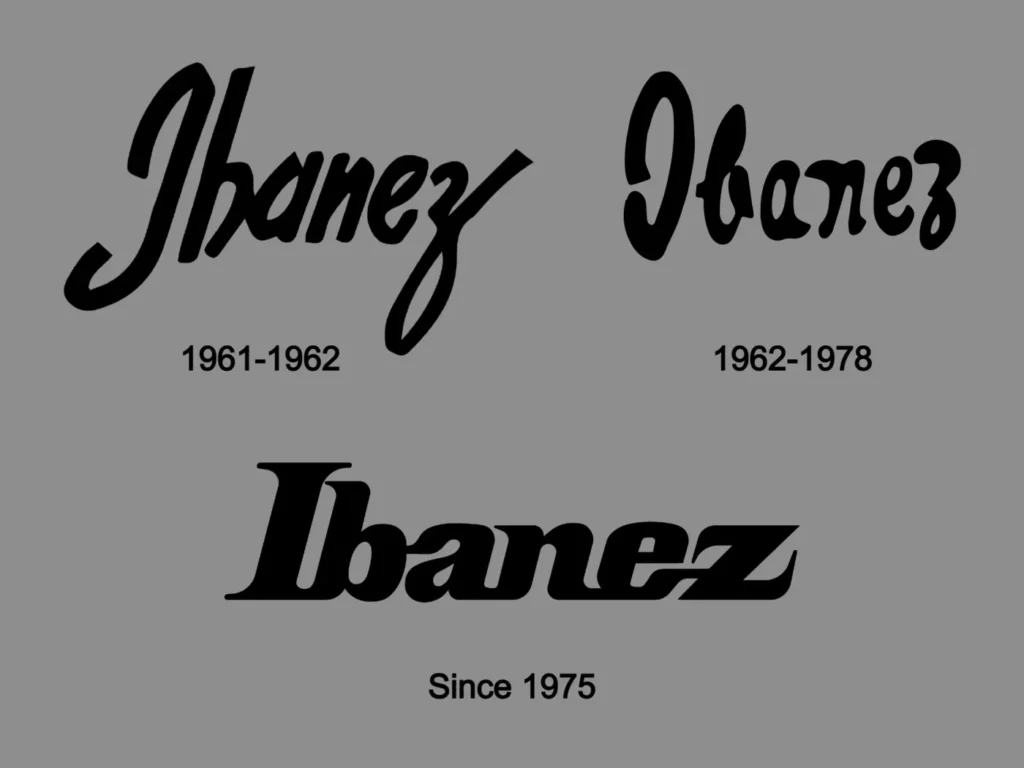
The logo could also serve as a clue to the date. Ibanez has changed its logo design several times throughout its history.
The 1961 to 1962 logo used a more fluid cursive style. If you see this logo, the guitar belongs to the earliest Ibanez branded period.
The 1962 to 1978 logo kept a script style, but it became bolder and smoother. This is the classic older Ibanez logo seen on many vintage instruments from the copy era and the years around it.
The current logo, which has been in use since 1975, has a simpler design, using straight lines and a modern look.
Final Notes:
- Some Ibanez serial systems overlap and conflict.
- Month charts were often designed for internal tracking.
- When in doubt, model features and hardware help confirm the year.
FAQ
What if I cannot find a serial number on my Ibanez at all?
That does not automatically mean the guitar is fake. Some Ibanez models had no serial number. The serial number decal may wear off or disappear over time. You can determine a guitar’s date using other characteristics, such as model, hardware, neck type, pickups, finish, and other features.
Can Ibanez tell me the exact model and year from the serial number?
Usually, no. But you can find the guitar model on the headstock. If not, look at the heel of the neck or in the neck pocket, but then you’ll have to separate the neck from the body.
Can a serial number prove that every part of the guitar is original?
No. A serial number can identify the neck, but not always the whole guitar as it exists today. Neck replacement is a fairly common problem, so it’s best to determine the instrument’s manufacturing date based on its full technical specifications if the serial number and hardware don’t match.
Why does my serial number show a year when this model shouldn’t have existed?
This can happen with Ibanez guitars. Some guitars were manufactured before the official release, some remained on sale longer in other markets, and some were limited editions and never mentioned in catalogs or other sources.
What does the CE mark next to the serial number mean?
It is not part of the serial number itself. Ibanez added the CE designation on electric guitars and basses in late 1996 to show compliance with European Common Market electronic standards.
How can I tell if an Ibanez is fake?
First of all, a price significantly below market value is a serious red flag. Secondly, pay attention to the instrument’s external characteristics. Look in catalogs to see what years the instrument was produced, what it looked like during that time, and whether the guitar meets those characteristics.
What if an Ibanez guitar has 2 different serial numbers at the same time?
Some Ibanez guitars can have a true serial number on the headstock and a separate number on the neck plate. The neck plate number is not a second serial number. If a guitar has both, the true serial number is the headstock number.